Augmented Reality Can Transform Workforce Capability w/ Dirck Schou
 David Wabel
The Modern Workforce: Augmented Reality Can Transform Workforce Capability
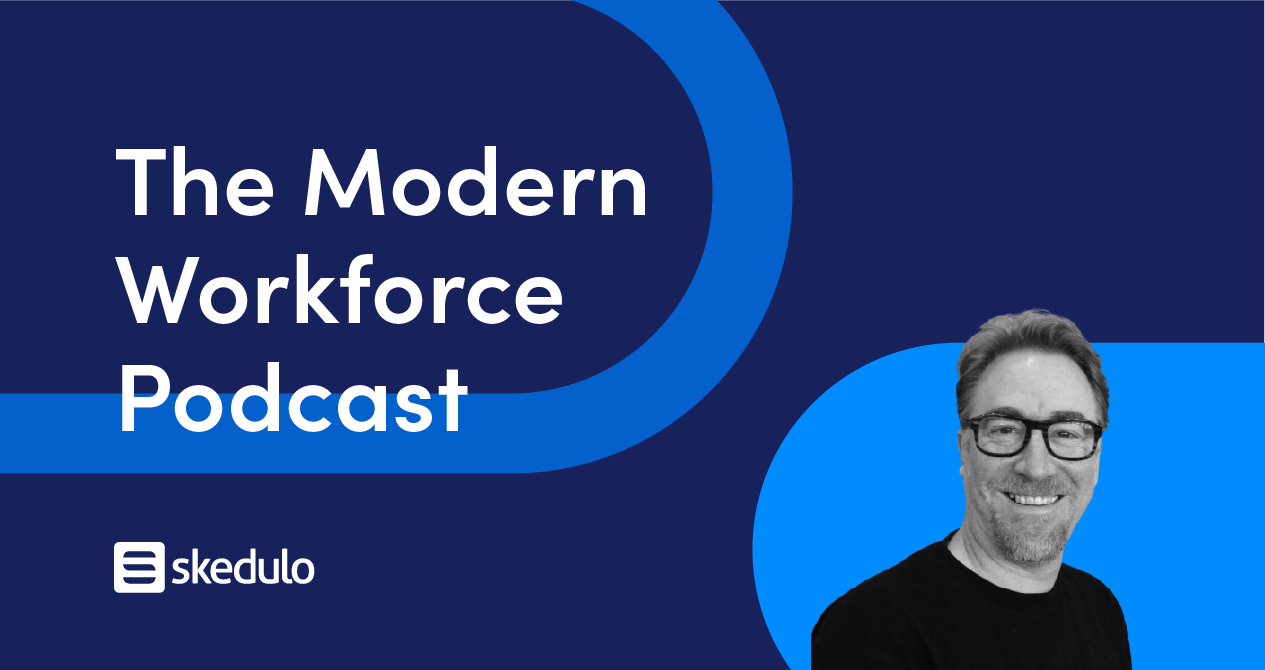
w/ Dirck Schou CEO & Co-founder at Taqtile

With the rise of AR technology, people are worried about more technology replacing workers. What if AR tech could be used not to replace jobs, but to create them?
Hear our conversation with Dirck Shou, CEO & Co-founder at Taqtile:
- How Taqtile’s Augmented Reality platform is significantly reducing training and maintenance time and costs for industrial manufacturing companies
How could AR reduce technology costs and meet the needs of frontline workers? Let's find out.
Who Is a Frontline Worker?
A frontline worker might be an industrial worker or they might be a server in a restaurant. They might be a surgeon or a nurse.
Put simply…
A frontline worker is anyone who doesn’t sit behind a desk.
Whatever their title, frontline workers hold one thing in common: their work is often rigorous and sometimes dangerous.
How AR Technology Reduces Costs
During COVID, a major supplier lost a swathe of its most experienced workforce. As a replacement, they hired young interns who had to be trained on the equipment and the operational procedures.
This company created 50 processes over many different pieces of equipment. It didn't take long to see that people could get by with much less training on most of the machines. Company leaders realized they could hire people with a strong baseline skillset and just let them loose with unbelievable technology.
Technology always sounds expensive, though, right? It runs up the expenses. Not so.
The new technology didn't take long to pay for itself, however. This company discovered they could take training from three weeks to three days, reduce loss and waste, and save $20,000 a shift.
Technology, they found, was gold because it empowers humans.
After all, if you could train someone in three weeks or three days, which one would you pick?
Augmented Reality Empowers Frontline Workers
The promise of a ubiquitous wearable transparent compute device that responds to what you tell it to do means an opportunity for the 80% of the workforce that's not sitting behind a desk. It's an incredible opportunity.
For frontline workers, an appropriate compute device is durable yet transparent. Technology cannot obscure their vision and must be unobtrusive.
Think about it like this: If you're operating a piece of machinery, and your vision cuts out, people could die. Industrial environments are dangerous. That's why companies post signs above their doors that say, "Safety is our number one priority. It's been XX days since our last accident. Let's keep up the good work."
Whatever you think of AR, the fact remains that…
We're going to have to cope with certain new realities.
- Skilled workers are retiring. +10% of our skilled frontline workers left in one fell pandemic-related swoop.
- Technology is advancing. Yes, the robots are coming. No, they won't replace us. Frontline workers have relied on digital tools for years.
- Augmented Reality can stem the silver tide. It lets skilled labor workers continue to use their knowledge and experience without requiring them to perform physical labor.
As Dirck says, “This is not a replacement technology, this is an extension and enablement technology.”
To make sure you never miss an episode of The Modern Workforce podcast, subscribe on Apple Podcasts, Spotify, or anywhere you get podcasts.

Dirck has over 20 years in business development in the technology sector and extensive experience building companies. He has focused on identifying early technologies that will revolutionize various aspects of the enterprise and building compelling real-world use cases and business models that scale. Dirck has been involved in two IPO’s and an acquisition including running the Western North America and Asia divisions of nCipher when it IPO’d in 2000. Connect with Dirck Schou on LinkedIn
Stream now on Apple, Google & Spotify


Join the growing list of readers receiving real-world insights on AI scheduling, field operations, and workforce innovation from Skedulo.
 Real operational insight
 What's changing in the industry
 Product thinking that helps you move faster
Communications are limited to relevant news and insights.
Related posts
The Future of Food Service: How Sodexo is Leading the Way
How does one of the world’s largest employers manage their workforce while investing in their employees, innovating in their industry, and providing high-quality service to their clients? Brent Bloomberg, CTO at Sodexo North America, is here to answer just that. With 400,000 employees, Sodexo is a…
Read the post
The New Healthcare Technology Workforce: On-Prem, Remote, & Hybrid w/ Lee David Milligan
What are the biggest concerns for the healthcare technology workforce right now? If you’re a CIO, recruitment and retention should be top of mind. Enjoy our conversation with Lee David Milligan, SVP & CIO at Asante: Recruitment, retention, and employee enablement Repurposing on-prem spaces and sup…
Read the post
The Modern Workforce Podcast - An interview with Omar Castillo
Global geopolitical issues exposed fragility of supply chains and forced companies to rethink how they create, sell, and deliver their products and services. Omar Castillo, Sr. Director of Global Operations at Thermo Fisher Scientific, is experiencing this firsthand, as he leads Thermo Fisher Scien…
Read the post