How Remote Patient Monitoring Can Reduce Healthcare Costs
 Ed Backhouse
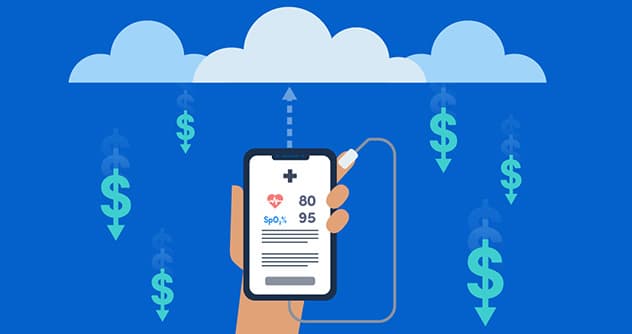
Skyrocketing costs, longer hospital stays, readmissions, and less-than-favorable outcomes—these factors make improving the bottom line a continual challenge for healthcare providers. But one of the major benefits of remote patient monitoring (RPM) is its ability to reduce costs.
- Over the next 25 years, RPM is expected to save $200 billion in healthcare costs globally.
- 69% of healthcare professionals ranked RPM the #1 reducer of overall costs.
What’s more, if the U.S. Centers of Medicare & Medicaid Services (CMS) gets its way, a new proposed rule that allows home healthcare providers to count RPM as a reimbursable cost will take effect as of January 1, 2019. This is in addition to the reimbursement that Medicare offers already.
Today, thanks to RPM technology, healthcare organizations can spend less time worrying about expenditures and more time focused on providing outstanding patient care. The cost savings of RPM can be significant for patients, as well.
RPM Eliminates Unnecessary Visits
When it comes to reducing healthcare costs, RPM steps in by monitoring patients around the clock and sending info to healthcare professionals in real-time. As a result, the need for in-person visits is shifting.
Using RPM, in-home care providers collect vital healthcare data, such as blood pressure readings, heart rate, breathing, glucose levels, weight, and more. This eliminates the need for routine, in-person visits that are just about collecting health data.
For example, RPM in one hospital network reduced postpartum hypertension visits by 57%, while also improving patient engagement. Those were not in-home visits, but the fact remains: easier access to patient data reduces the need for patient visits, which reduces healthcare costs.
RPM Optimizes Time Spent with Patients
With RPM technology, medical professionals need not spend valuable time on the intake of routine vitals and questions (e.g., how the patient is sleeping), because this data is available to the provider before the visit. This means in-person time can be spent answering questions and otherwise making the most of the health visit.
In addition, when healthcare professionals are less inundated with routine tasks, they’re less likely to experience burnout. Stressed medical care providers are less efficient, they may quit or be fired, and it’s expensive to hire, train, and onboard new employees.
RPM Improves Communication
RPM enables efficient communication between medical professionals and their patients to manage care for a variety of injuries, illnesses, and chronic conditions. By overcoming the obstacle to in-person visits that geographical distance poses, RPM technology allows more frequent contact and a stronger relationship between the patient and provider. Tools such as video conferencing, mobile apps, and data monitoring allow practitioners to treat patients more efficiently and effectively. This results in catching health problems at earlier stages and a decrease in readmissions, which helps reduce healthcare costs.
Providers can also use this technology to send patients reminders to take medications or attend upcoming visits. These reminders facilitate better outcomes, prevent the wasted time and expense that occurs with missed appointments, and reduce costs because health conditions are more likely to be caught in the earlier stages.
RPM Reduces Healthcare Costs for Patients, Too
Of course, these cost savings are passed on to the patient, as well. Not having to pay for unnecessary visits, optimizing the time spent with healthcare providers when they do visit, and improved outcomes means less medical care down the road.
Just as importantly, RPM technology increases patient engagement. Engaged patients are more likely to follow healthcare provider recommendations and be compliant with treatment regimens. This makes healthcare efforts more efficient and reduces the likelihood of additional treatments. Engaged patients with chronic conditions are also easier to monitor regularly, which enables more consistent care and fewer emergencies.
Reducing Health Care Costs Is a Win-Win
Given the increasing demand for an improved healthcare experience, it behooves providers to consider RPM as a way to find opportunities to improve their ROI while enhancing the quality of patient care. Healthcare providers are turning to RPM to improve their bottom lines.
For chronic illness management, hospital readmission prevention monitoring, caring for elderly or homebound patients, and monitoring high-risk patients, RPM optimizes communication with healthcare providers. RPM also allows patients to enjoy the convenience of in-home care, and eliminates the need for unnecessary office visits.
Join the growing list of readers receiving real-world insights on AI scheduling, field operations, and workforce innovation from Skedulo.
 Real operational insight
 What's changing in the industry
 Product thinking that helps you move faster
Communications are limited to relevant news and insights.
Related posts

Operations Management in Healthcare: Strategies to Improve Operations
At the crossroads of an aging workforce and post-COVID staffing shortages, healthcare operations management has never been more critical. To manage hundreds of providers across distributed locations and ensure high-quality patient care, it starts with effectively planning, organizing, and analyzing…
Read the post
How to Schedule Medical Specialists for Optimal Efficiency and Patient Care
Effective healthcare scheduling requires understanding not only who is delivering care and what services are provided, but also where they happen. Single-site providers, such as an emergency medicine physician employed by a single ER, consistently work at a fixed location. Their schedules are shift…
Read the post
Digital Transformation of Field Service Scheduling and Operations
Digital transformation is the process of introducing and incorporating digital tools into a business’s workflows and operations. The process is widely applicable and can modernize just about any area of a business, including customer success, sales, marketing, operations, IT, and mobile workforce s…
Read the post