Innovation in Mobile Tech and AI for Clinical Trials, Patients, and Workers
 David Wabel
The Modern Workforce: Innovation in Mobile Tech and AI for Clinical Trials, Patients, and Workers
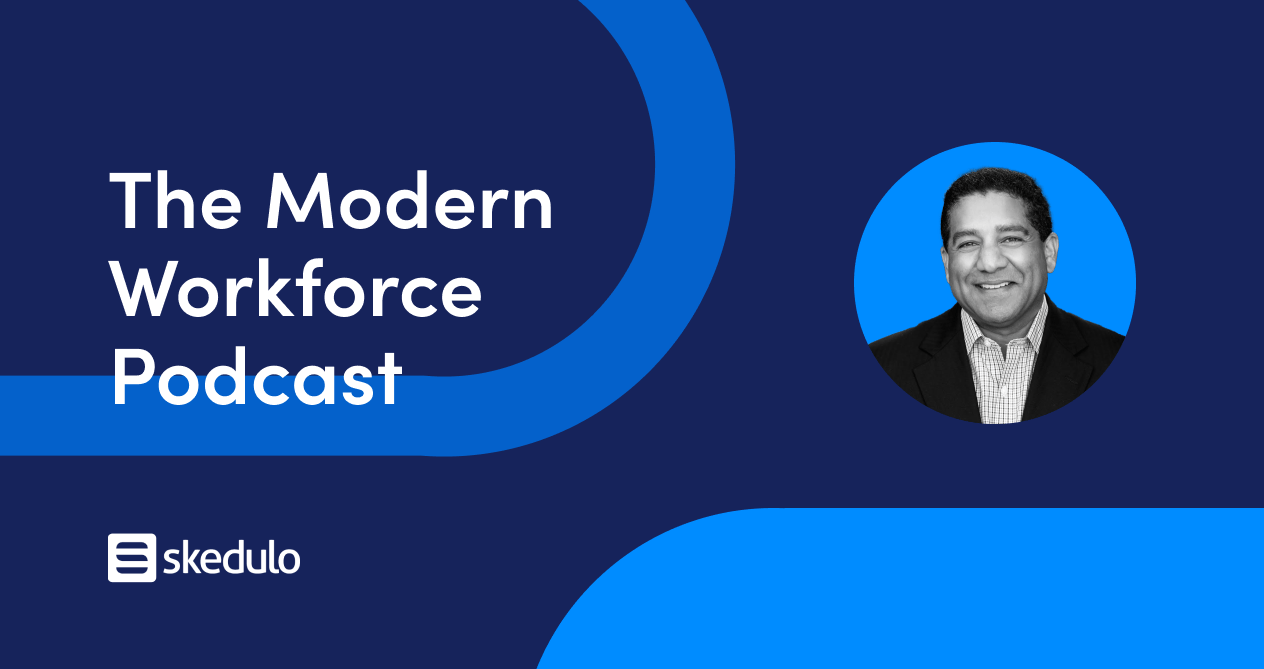
w/ guest Nikheel Kolatkar Vice President of Scientific Operations, US Medical Affairs at Genentech

Innovation in mobile technology improves clinical trial diversity, worker and patient experience, and data quality.
Recently on The Modern Workforce, we spoke with Nikheel Kolatkar, Vice President of Scientific Operations, US Medical Affairs at Genentech, about:
- How COVID-19 advanced remote tech in clinical research
- The growing role of conversational AI in healthcare and its impact on healthcare workers and patients
- Why mobile tech and clinical trial diversity go hand-in-hand
What are the main benefits of this approach to much-needed research? Let’s dig deeper.
Catalyzing creativity
Nik has always had an interest in the intersection of medicine and business.
A fellow of Harvard Medical School in endocrinology, Nik also has a Master of Public Health and an elite management certification from the illustrious MIT.
He founded a startup while in medical school that focused on helping med students keep track of all their notes on some of the earliest mass-use mobile devices. It got so popular that he had to take a leave of absence from Harvard.
Nik is intimately familiar with what it takes to build a successful team from the ground up.
Clinical cornerstones
The development of lifesaving drugs depends on unimpeachable clinical trials. Controls and standardization are absolutely crucial.
Fewer than one out of 100 potential medicines make it through the rigorous testing it takes to get approved.
So when the pandemic happened, vital research projects came to a screeching halt.
Nik was instrumental in keeping the ball rolling by embracing remote work technology to continue these important clinical trials.
In the midst of testing a promising breast cancer medication, patients were empowered to self-administer during the lockdown and avoid traveling to a doctor’s office—and possible exposure to a deadly virus.
Mobile tech made the trials more efficient and more convenient for his patients.
“Mobile technology can really help the patient by making things more convenient, and it can help us as a company by making trials more efficient."
 Nikheel KolatkarVice President of Scientific Operations, US Medical Affairs at Genentech
The role of conversational AI
Nik also created a genetic innovation hub that leveraged AI to drive a dynamic messaging platform that’s focused on future clinical trials and a patient-first approach.
Examining their journey and their pain points will lead to exciting new tech solutions. There’s unfortunately not a one-size-fits-all; what works for a young person with MS won’t work for an elderly macular degeneration patient.
Five years from now, clinical trials will look completely different.
Both physicians and patients expect to get things done online, they don’t have time to sit around on the phone.
Even though Nik hates the term “chatbot,” this iteration of conversational AI helps people get the answers they need about their clinical trial, when they need them.
A broader patient population
This technology is helping to widen the impact of clinical research to potential patients that don’t live near a major hospital or university.
It also increases the participation of patients from a lower socioeconomic strata, who traditionally don’t have much of a chance to be included. Nik states that Genentech has a big mission to increase the diversity of their clinical trials.
COVID largely affected those with pre-existing conditions, in dense populations, with limited access to comprehensive health care. Underrepresented minorities had much worse outcomes.
But Nik was able to execute a trial with 84% minority patients, and was able to do it quickly. Decentralized trials and innovative technology encourages more participation and better results.
To make sure you never miss an episode of The Modern Workforce podcast, subscribe on Apple Podcasts, Spotify, or anywhere you get podcasts.

Nik is a recognized biopharmaceutical leader focused on catalyzing creativity and bringing out the best in people to deliver life-changing medicines, a world-class customer experience, and better outcomes for more patients, He has degrees from Cornell, Georgetown, Baylor, an MD from University of Minnesota as well a MPH from Harvard. Connect with Nikheel Kolatkar on LinkedIn
Stream now on Apple, Google & Spotify


Join the growing list of readers receiving real-world insights on AI scheduling, field operations, and workforce innovation from Skedulo.
 Real operational insight
 What's changing in the industry
 Product thinking that helps you move faster
Communications are limited to relevant news and insights.
Related posts
The Future of Food Service: How Sodexo is Leading the Way
How does one of the world’s largest employers manage their workforce while investing in their employees, innovating in their industry, and providing high-quality service to their clients? Brent Bloomberg, CTO at Sodexo North America, is here to answer just that. With 400,000 employees, Sodexo is a…
Read the post
The New Healthcare Technology Workforce: On-Prem, Remote, & Hybrid w/ Lee David Milligan
What are the biggest concerns for the healthcare technology workforce right now? If you’re a CIO, recruitment and retention should be top of mind. Enjoy our conversation with Lee David Milligan, SVP & CIO at Asante: Recruitment, retention, and employee enablement Repurposing on-prem spaces and sup…
Read the post
The Modern Workforce Podcast - An interview with Omar Castillo
Global geopolitical issues exposed fragility of supply chains and forced companies to rethink how they create, sell, and deliver their products and services. Omar Castillo, Sr. Director of Global Operations at Thermo Fisher Scientific, is experiencing this firsthand, as he leads Thermo Fisher Scien…
Read the post