
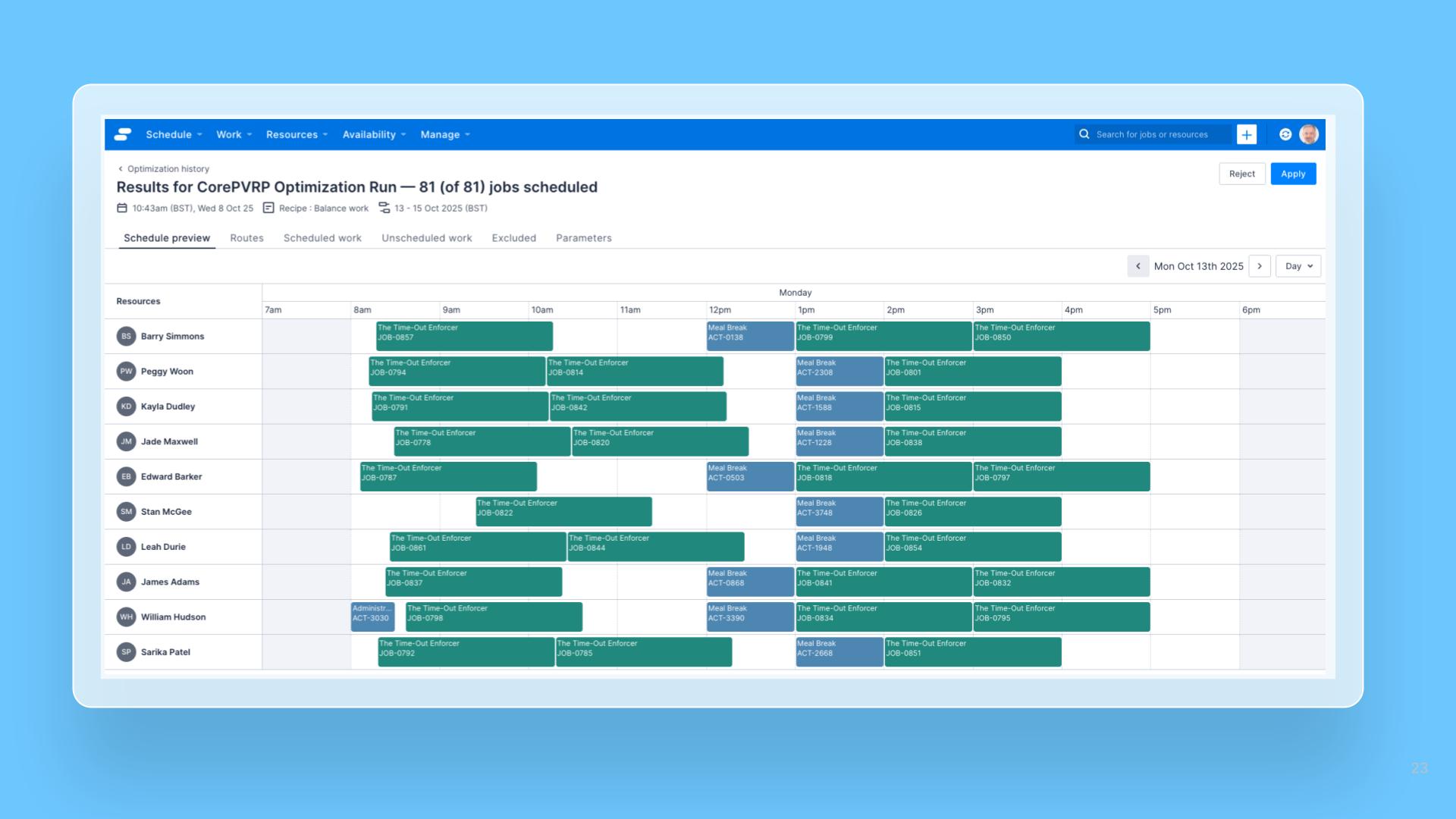


Overview:
We’ve refined how the optimizer interprets Activities without addresses to deliver more realistic and efficient scheduling. Previously, user-defined breaks, such as lunch or rest periods, were treated as full unavailability, assuming resources had returned home. This caused route inefficiencies and misaligned availability.
What’s new:
Enhanced optimizer logic: Breaks entered without an address are now treated as temporary pauses at the resource’s current location.
Improved location assumptions: The system maintains the resource’s last known position during a break unless specified otherwise.
Value to users:
Accurate schedules: Better alignment between planned and actual field activity.
Efficient routing: Optimized post-break assignments to reduce unnecessary travel.
Improved confidence: Schedulers and field workers can rely on the system to reflect practical break behavior.