How Employee Scheduling Drives Revenue Growth

 April 8, 2026
 6 min read


For leaders managing hundreds or thousands of mobile workers, employee scheduling is more than an administrative task—it’s a revenue lever. Efficient and effective scheduling drives revenue growth, and poor scheduling cascades into overtime costs, customer churn, and turnover that can cost millions annually.
Dive deeper into how employee scheduling drives revenue growth in three areas: enabling your workforce to do more with the same resources, delivering customer experiences that generate loyalty and referrals, and building the engaged, brand-representing workforce that commands premium pricing and repeat business.
Scheduling efficiency: doing more with the same resources
At its core, scheduling efficiency means generating more revenue from the same resource base or generating the same revenue at a lower cost. For companies with large mobile workforces, scheduling decisions directly affect the top line. Every additional job completed, every hour of travel time eliminated, and every first-time fix represents revenue captured rather than revenue lost.
Scheduling efficiency drives productivity, which pays off: McKinsey research found that companies in the 75th percentile of productivity deliver 95% more revenue per employee than those at the median—and companies in the 90th percentile deliver 300% more.
When companies deploy their people effectively through smart scheduling and route optimization, the benefits compound rapidly. For a workforce of 500, completing one additional job per day with an average revenue of $200 per visit adds up to a $26M increase in annual revenue without adding headcount. For larger workforces, more profitable services, and even greater productivity gains, the revenue impact is even more significant:
| Field Service Technicians | Revenue per Service | Add’l Jobs per Week | Added Revenue per Year |
|---|---|---|---|
| 500 | $200 | 5 | $26M |
| 750 | $225 | 6 | $53M |
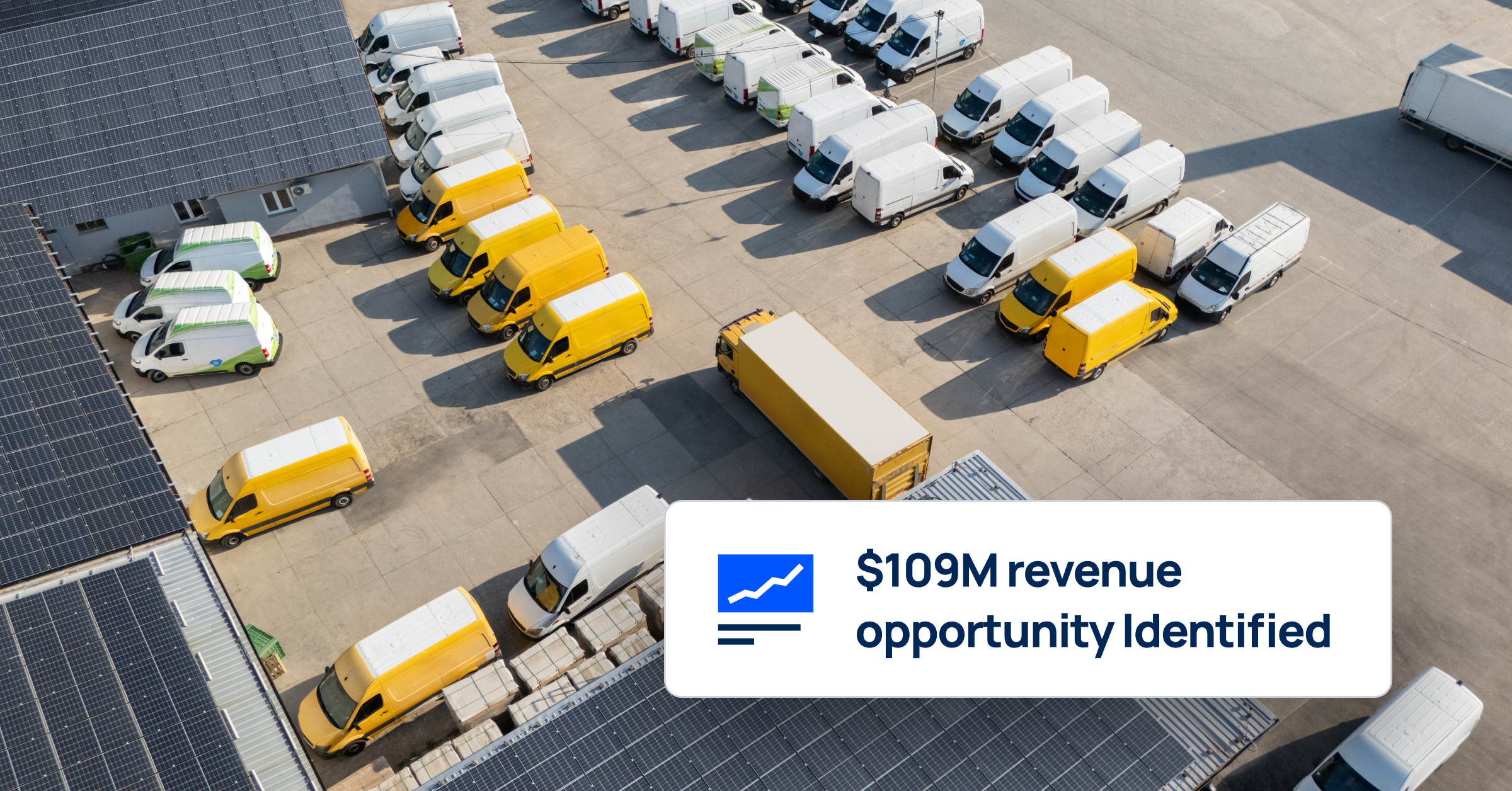
| 1000 | $300 | 7 | $109M |
| 1500 | $350 | 8 | $218M |
Beyond job volume, workforce utilization metrics tell the real story of scheduling efficiency. The optimal utilization rate depends on the industry and the type of service being performed; fields such as home healthcare, with significant paperwork and compliance requirements, will naturally have lower utilization rates. But across all types of mobile work, companies can empower their workers to spend more time on revenue-generating activities and less time on driving, waiting, and searching for information.
How employee scheduling software drives productivity
Advanced employee scheduling software directly impacts the productivity metrics that drive revenue. Intelligent scheduling systems optimize routes to minimize travel time, match jobs to workers with the right skills and equipment, and automatically rebalance schedules when disruptions occur.
- Route optimization reduces windshield time, enabling more appointments per day and lowering fuel and vehicle costs.
- Skills-based matching ensures the right technician arrives the first time, reducing repeat visits that cost time and erode margins.
- Real-time schedule updates eliminate gaps between appointments, capturing revenue that would otherwise be lost to downtime.
- Automated scheduling frees dispatchers to handle exceptions rather than routine assignments, enabling each scheduler to manage larger workforces more effectively.
Field service scheduling and customer experience
Customer experience is the primary battleground for competitive advantage. And for companies that deploy mobile workers, every appointment, service call, and home visit shapes how customers perceive your brand. Field service scheduling is the operational foundation that determines whether those experiences delight or disappoint.
Consider what drives customer retention in mobile service interactions: the technician arrives on time, fully prepared with the right tools and information. They complete the work efficiently, answer questions knowledgeably, and leave the customer confident the job was done right. This experience doesn’t happen by accident; it requires scheduling systems that set realistic appointment windows, match jobs to qualified workers, and provide field teams with complete customer and job information.
Customer satisfaction and engagement have a huge impact on revenue. Gallup research on customer engagement found that highly engaged customers represent a 23% premium in profitability and revenue compared to average customers, while disengaged customers represent a 13% discount. This 36-point difference in customer value depends on the experiences frontline workers deliver in the field. Every missed appointment, unprepared technician, or extended wait erodes customer lifetime value and increases churn.
How scheduling software supports exceptional customer experiences
The foundation of a great customer experience in field service is keeping promises. Employee scheduling software that accounts for travel time, job complexity, and worker expertise helps companies set realistic appointment windows—and keep them. Automated notifications keep customers informed, reducing uncertainty and building trust.
- First-time resolution rates improve when scheduling matches the right worker with the right skills and equipment to each job, eliminating return visits that frustrate customers.
- Customer preferences can be honored when scheduling systems prioritize factors like preferred technicians, appointment times, and communication methods.
- Workers arrive prepared when mobile apps integrated with scheduling provide complete customer history, equipment details, and prior service notes.
Real-time updates keep customers informed when schedules change, reducing customer effort and building confidence in your service.
Field service scheduling and the employee experience
For customers, your frontline workers are your company. The technician in the yard, the healthcare worker in the home, the installer on the roof—they embody your brand in face-to-face interactions. And employee scheduling directly shapes whether they show up engaged and prepared, or frustrated and checked out.
Employee engagement—driven in part by schedule predictability, reasonable workloads, and a sense of being equipped to succeed—is directly linked to revenue. Gallup research shows that highly engaged business units achieve 23% higher profitability, 18% higher sales productivity, and 10% higher customer loyalty. When workers have predictable schedules, reasonable workloads, and the information they need to succeed, that positive experience translates directly into better customer interactions and stronger revenue performance.
Poor scheduling does the opposite. Unpredictable hours, unrealistic workloads, and constant schedule changes drive burnout and turnover. McKinsey estimates that disengagement and attrition can cost a median S&P 500 company $228-355M annually in lost productivity. For frontline workforces already facing labor shortages, the cost of replacing a single worker—$4,700+ on average, not including lost productivity—makes retention a direct financial priority.
Employee scheduling also shapes recruiting. Your current employees are powerful recruiting channels: a positive employee experience attracts quality candidates, while poor scheduling and unreasonable workloads send them to competitors.
How scheduling software supports engaged, brand-building workers
Employee scheduling software directly impacts how workers experience their jobs—and whether they feel set up for success or for failure. Mobile workers want technology that helps prepare them for the work ahead:
- Predictable schedules and reasonable workloads reduce burnout and improve work-life balance, a top driver of retention in frontline roles.
- Skills-matched assignments give workers the right jobs and the confidence they need to succeed, rather than frustrating them with mismatched expectations.
- Mobile-first schedule access keeps workers connected and informed, reducing the isolation that contributes to disengagement in mobile roles.
Real-time schedule updates demonstrate respect for workers’ time, an essential part of a positive employee experience that drives engagement and retention.
Scheduling as a revenue multiplier
Employee scheduling creates operating leverage: as scheduling efficiency improves, each dollar of revenue costs less to generate. A workforce that completes more jobs per day, retains customers longer, and experiences lower turnover does more than add to revenue—it amplifies revenue.
A company that improves scheduling efficiency, customer satisfaction, and worker retention simultaneously sees multiplicative gains. Revenue grows while the cost base grows more slowly, expanding margins and creating a competitive advantage that’s difficult for rivals to replicate.
- If scheduling automation allows each dispatcher to effectively manage 50 workers instead of 25, administrative costs per worker drop by half.
- If route optimization reduces average drive time by 20%, vehicle and fuel costs decline while job capacity increases.
- If better scheduling improves customer retention by 10%, marketing spend to acquire replacement customers decreases, and customer lifetime value increases.
These aren’t hypothetical gains. Skedulo customers report a 48% reduction in time required to schedule workers, a 20% increase in resource utilization, and 27% more jobs completed. Solace Pediatric Home Healthcare achieved an 84% reduction in patient no-shows in a single quarter, recapturing revenue that would otherwise be lost to missed appointments.
How scheduling software delivers compounding revenue benefits
Employee scheduling sits at the intersection of the factors that drive mobile workforce revenue: productivity, customer experience, and worker engagement. The right frontline workforce technology creates leverage across all these areas simultaneously:
- Automation reduces overhead: AI-assisted scheduling handles routine decisions, freeing schedulers to focus on exceptions and allowing them to manage larger workforces effectively.
- Integrated systems eliminate friction: Connections to Human Resources (HR), Customer Relationship Management (CRM), Electronic Health Records (EHR), and Enterprise Resource Planning (ERP) systems ensure scheduling decisions reflect real-time data about workers, customers, and business priorities.
- Data drives continuous improvement: Visibility into utilization, travel time, first-time fix rates, and customer satisfaction enables leaders to identify and address scheduling bottlenecks.
- Scalability supports growth: A scheduling platform that grows with your workforce—whether you’re managing 100 workers or 10,000—ensures efficiency gains persist as the organization expands.
The bottom line
Every scheduling decision affects productivity, customer experience, and workforce engagement. To drive revenue growth, deploy employee scheduling software that optimizes for business outcomes, not just filled time slots. The result is more jobs completed, better customer experiences, higher worker engagement, and operating leverage that compounds over time.
Skedulo is smart scheduling for the mobile workforce. Automate routine scheduling decisions, get AI-assisted decision support, and communicate schedules to all workers in a mobile-first interface. Skedulo integrates with HR, CRM, and ERP systems to pull relevant data for real-time scheduling decisions—ensuring your workforce is deployed for maximum productivity, customer satisfaction, and revenue.
Skedulo customers achieve an average ROI of 9x, along with measurable gains in scheduling efficiency, productivity, and customer satisfaction. Request a demo to see how Skedulo’s employee scheduling software can help your mobile workforce drive revenue growth.
Join the growing list of readers receiving real-world insights on AI scheduling, field operations, and workforce innovation from Skedulo.
-
 Real operational insight
-
 What's changing in the industry
-
 Product thinking that helps you move faster
Communications are limited to relevant news and insights.
Join the growing list of readers receiving real-world insights on AI scheduling, field operations, and workforce innovation from Skedulo.
-
Real operational insight
-
What's changing in the industry
-
Product thinking that helps you move faster
Communications are limited to relevant news and insights.